
A writer who lived on Sonoma Mountain walks us through a new segment of Ridge Trail that opens his onetime backyard to the public.
Sign up for our free weekly newsletter and understand everything better!
A writer who lived on Sonoma Mountain walks us through a new segment of Ridge Trail that opens his onetime backyard to the public.
Our native fish may be down, but they’re not out, they’re hanging on in ecosystems they once ruled. And biologists and environmental advocates alike are working to make things better. The fish have advocates, and the exhibit is a tool for that advocacy, a means of engaging the public at large.

You’ll likely smell them before you see them: A rich ammoniac scent engulfs our boat, and then they loom out of the fog – spires of naked rock, eerily lunar in configuration. And as they emerge, there’s an aural accompaniment: the cackles … Read more

The Farallon Islands off the San Francisco Bay may be small in scope but it ranks with the Serengeti in its significance to conservation.
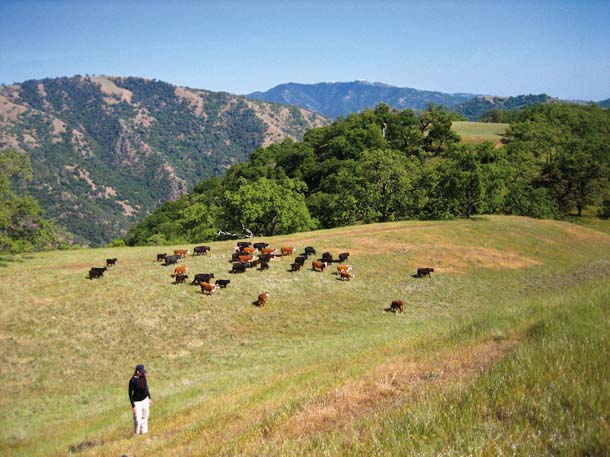
The looming bulk of Mount Hamilton is a familiar sight to anyone driving Highway 101 through the Santa Clara Valley. At 4,196 feet, it’s the tallest peak visible from the shores of San Francisco Bay. This is the most expansive wild landscape in the Bay Area: roughly 700,000 acres of public parks, university and conservancy reserves, and private ranches. Now it’s also become a living laboratory for studying the affects of climate change.
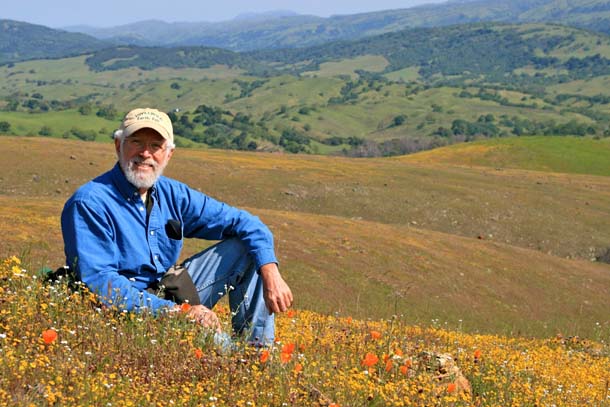
Mike Hamilton, director of the Blue Oak Ranch Reserve on Mount Hamilton, describes himself as a “digital naturalist.” He’s wired the reserve’s 3,260 acres with sensors, sent up drone helicopters, and even set up a “Robosquirrel” in an effort to find out how climate change is impacting the region’s ecosystem.
-150x150.jpg)
Grizzlies may be long gone and mountain lions few and far between, but many smaller predators are thriving in Bay Area wildlands and even in cities and suburbs. From plentiful raccoons and skunks to elusive badgers, midsize predators are major players in local ecosystems, so next time you hear the late-night clatter of garbage cans, give a nod to these scrappy survivors.
-150x150.jpg)
When it comes to the challenge of preserving biodiversity in the face of climate change, population growth, and other pressures, you have to think big. A new regional plan does just that with a proposal for a comprehensive Conservation Lands Network whose implementation would help ensure the preservation of diverse habitats essential for the survival of healthy populations of native species.
-150x150.jpg)
Fast, silent, and deadly, the great white shark has long evoked both fear and awe among those who live, work, and play along the California coast. Yet for all its press–both good and bad–we’ve known remarkably little about the life of this iconic creature. But recent scientific studies using pioneering tracking techniques are finally giving us a better look at the white shark’s wide-ranging haunts and habits.
-150x150.jpg)
This winter, as they have for decades, fishermen in the Bay’s last commercial fishery will launch their boats in search of spawning herring. These small fish come into the Bay from the ocean to lay their eggs. People aren’t the only ones on the hunt for herring; seals and seabirds depend on this bounty as well. But changing consumer tastes, rising costs, and unstable marine conditions have put the squeeze on the both the hunter and the hunted, and now the survival of this historic fishery is very much in question.