Land of the Salamander
December 31, 2012 by David Rains Wallace
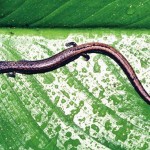
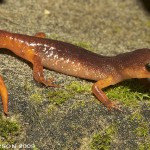
North America has more kinds of salamanders–the tailed, mostly four-legged amphibians–than any other continent. Your backyard is probably full of them right now!
December 31, 2012 by David Rains Wallace
North America has more kinds of salamanders–the tailed, mostly four-legged amphibians–than any other continent. Your backyard is probably full of them right now!
December 12, 2012 by David Rains Wallace
For an animal that’s been given mythic properties, the salamanders of the world have some pretty colorful names.
July 01, 2012 by David Rains Wallace
When I started visiting Point Reyes in the 1970s, the landscape from Limantour Beach up to the crest of Inverness Ridge had a special appeal. I had spent my early childhood in the New England countryside in the 1940s, so vestiges of the pre-Seashore ranching days made me nostalgic–homestead sites, dammed lakes, fence lines, timothy hay growing in old fields. On the other hand, watching the wild ecosystem come back, with its brush rabbits, jackrabbits, quail, hawks, and bobcats, was endlessly fascinating.
June 22, 2012 by David Rains Wallace
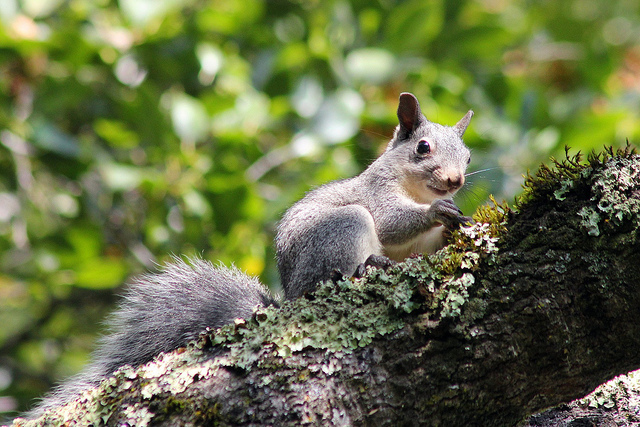
Tree squirrels can seem marginal in cities. But in the bishop pine forests at Point Reyes National Seashore, Western gray squirrels are the only animals known to open pine cones and disperse the seeds. They are bold, sizable, and entirely wild — unlike their urban cousins. And their sheer bravado shows what a spirited creature a squirrel can be.
July 01, 2007 by David Rains Wallace
Mount Diablo’s woodlands and canyons provide habitat for a fantastic variety of raptors, from kestrels to golden eagles (of which …
July 01, 2007 by David Rains Wallace
Mount Diablo is such a towering icon of our landscape that it is sometimes easy to forget how much complexity lies within its familiar outline. Indeed, the mountain holds many stories: from the drama of its birth under the ocean, to its (mis)naming by early American settlers, to last year’s rediscovery of the rare Mount Diablo buckwheat. Today the story continues, with the mountain and its surrounding ridges and canyons anchoring a bold vision for a broad swath of protected open space and wildlife corridors stretching from Concord to Livermore.
July 01, 2007 by David Rains Wallace
This strenuous 5.3-mile hike circumambulates Mount Diablo’s summit, and traverses many of the mountain’s geological and botanical features. When I …
January 01, 2006 by David Rains Wallace
When European explorers and naturalists began coming to California a few centuries ago, most sailed right past the fog-shrouded Golden Gate. But those few who did stop here, including the botanist-poet who first described the California poppy, left tantalizing clues to the world they saw before the Gold Rush transformed the Bay Area from backwater to boomtown.
January 01, 2004 by David Rains Wallace
A million years ago, in a climate much like ours today, the land around an ancestral bay teemed with large animals: mammoths and saber-tooth cats; bears, horses, and peccaries. By 300 years ago, the mammoths were gone, but grizzlies, elk, condor, and pronghorn were abundant.European settlers wiped out many of those animals, but programs to reintroduce some of them are now under way. Which raises the question: What should a healthy, native megafauna look like now?
April 01, 2002 by David Rains Wallace
After moving to Berkeley from Mendocino County, writer David Wallace found that he missed the springtime serenades of his local amphibians. So the dug a small pond in his backyard to see if he could get a few frogs to breed there. It turns out that despite the very real threats posed by pollution and sprawl, the Bay Area’s native frogs are remarkably resilient survivors.